Pressure-washer storage card
Shut down, drain, protect, and park
01Shut down
- Stop the motor or engine and water supply in the documented order
- Relieve stored pressure and lock the trigger as the manual directs
- Let a gasoline engine cool completely before storage
- Stop for leaks, fuel odor, cord damage, or an active recall
02Drain and protect
- Drain the pump, hose, gun, wand, and detergent system by the model procedure
- Use only the manufacturer-approved pump protector and connection method
- Treat an unheated garage as a possible freeze zone
- Coil hoses broadly and let wet accessories dry before enclosing them
03Park and record
- Tape the complete frame, accessory, and retrieval footprint
- Keep the unit dry, upright, stable, visible, and clear of ignition sources
- Separate portable-fuel-container storage from the machine decision
- Record winterization work and the return-to-service checklist
Field note: Do not run a gasoline pressure washer in a garage. Model manuals, recall notices, product labels, and local fire requirements take priority over this planning checklist.
The direct answer: the manual decides the storage procedure
A pressure washer can live in a garage when the exact machine is shut down, drained, protected from temperature extremes, and placed where it remains stable and inspectable. Start with the model number and current owner's manual. Electric and gasoline machines—and even two pumps that look alike—can require different detergent flushing, pressure-release, pump-protection, fuel, oil, and long-term storage steps.
Do not turn a general checklist into a substitute for the manual. Before storage, check the model against the U.S. Consumer Product Safety Commission's pressure-washer recall list. Stop using a recalled, leaking, damaged, or self-starting machine and follow the official remedy rather than testing it in the garage.
Measure the whole storage kit, not just the wheeled frame
Measure the washer with its handle in every manufacturer-approved position, then add the high-pressure hose, spray gun, wand, nozzles, detergent system, power cord or engine clearance, and the route needed to roll it out. A compact frame is not compact when a stiff hose becomes a second pile on the floor.
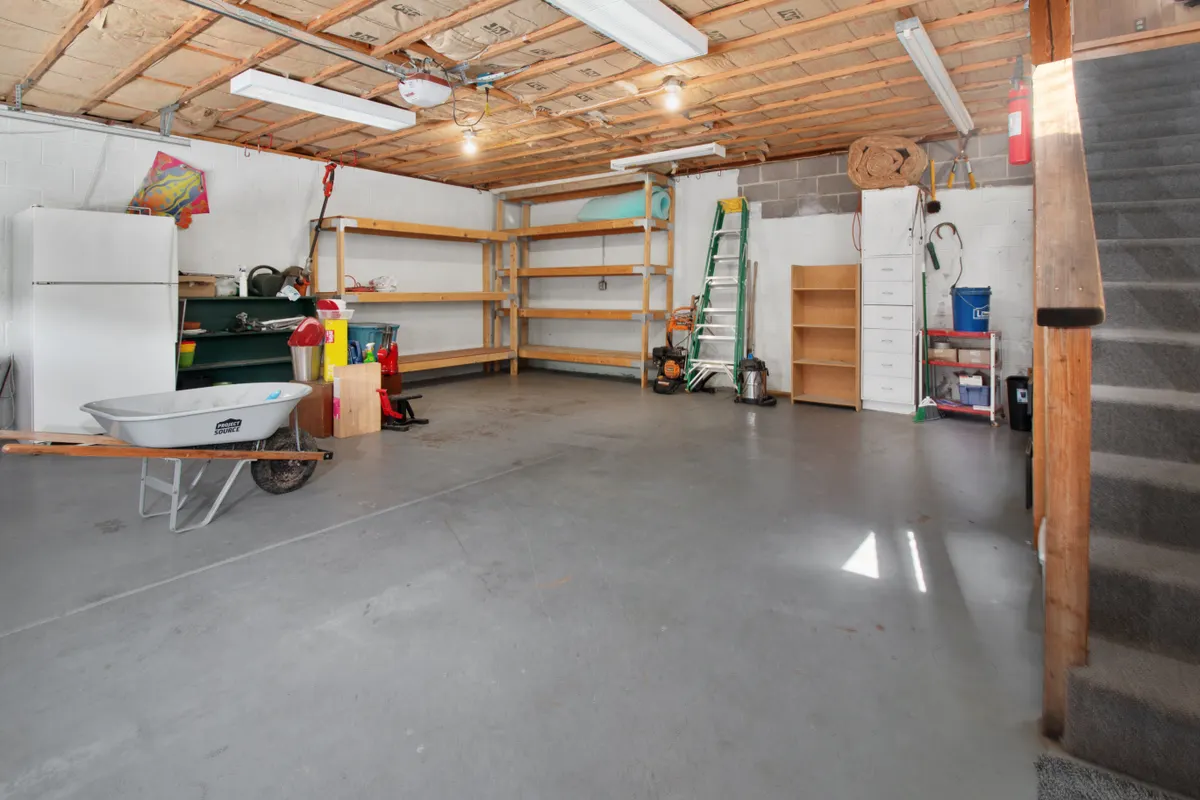
Tape the complete footprint with vehicles parked and the garage door fully open. Open vehicle and house doors, move trash carts, and roll the washer out from its intended side. Keep the unit, wand, and hose clear of tires, steps, electrical panels, water heaters, floor drains, door tracks, and the normal path into the house.
- Frame: complete length, width, handle, wheels, and approved folded position
- Water path: garden-hose inlet, high-pressure outlet, hose, gun, wand, and nozzles
- Power system: dry cord storage for electric models; engine and fuel checks for gas models
- Retrieval route: enough room to inspect, roll out, reconnect, and service the machine
- Freeze plan: the lowest temperature the garage can actually reach, not the thermostat indoors
End every session with a controlled shutdown
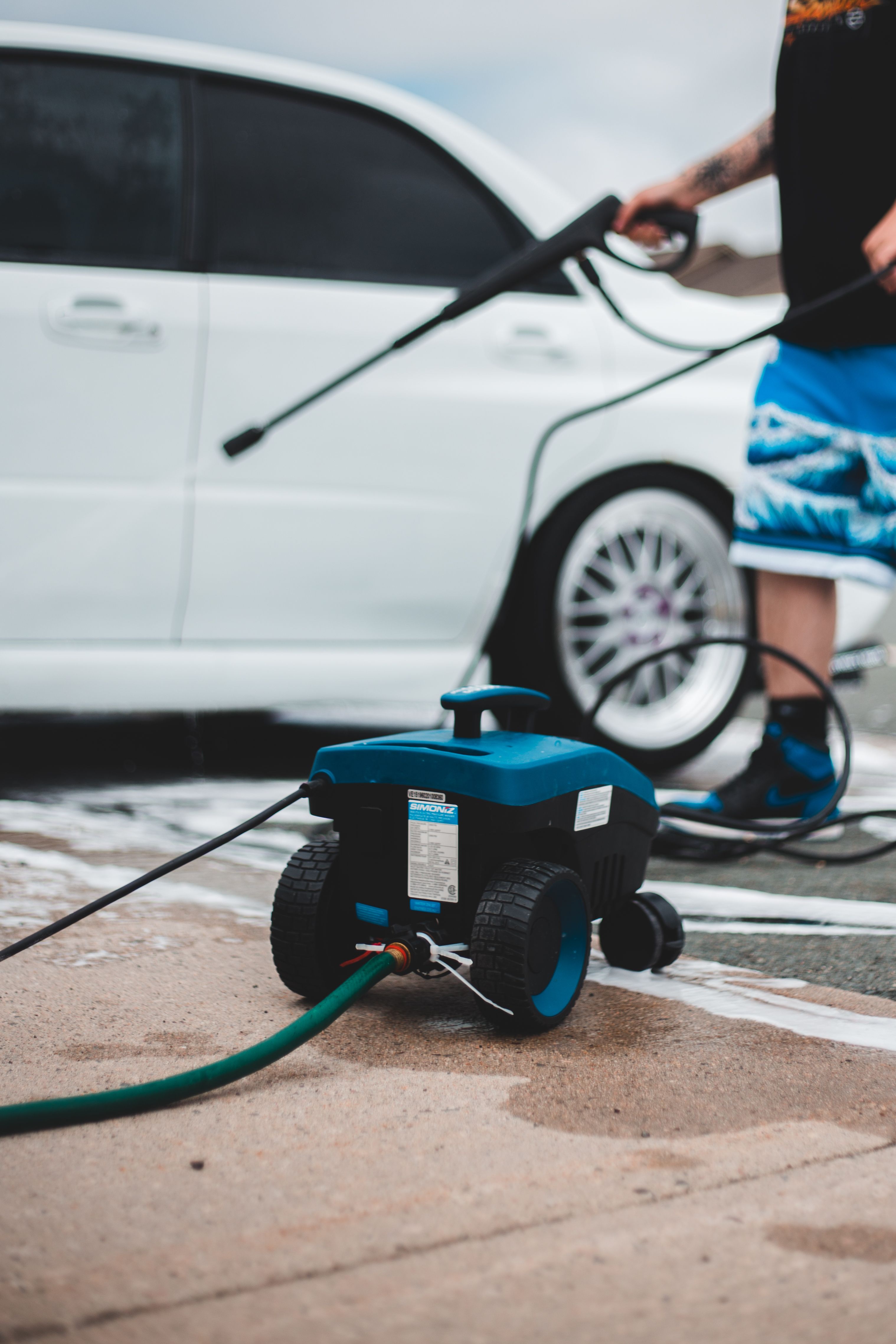
Follow the manual's sequence to stop the motor or engine, shut off the water supply, release stored pressure through the spray gun, and disconnect the hoses. Let a gasoline engine cool completely before moving it into storage. Keep the trigger secured only with the supplied lock or the method documented for the exact gun.
Drain the garden hose, high-pressure hose, gun, wand, and any detachable detergent tank in the order the manufacturer specifies. Rinse a detergent system only when the manual calls for it and never mix cleaners in the tank. Wipe the exterior, inspect fittings and seals, and let wet accessories dry before coiling or enclosing them.
Treat an unheated garage as a possible freeze zone
A garage can fall below freezing even when the adjacent house stays warm. Residual water can freeze inside a pump, hose, gun, or fitting and damage it. Kärcher's U.S. guidance tells owners to drain pressure washers, use Pump Guard for winter storage, keep them dry, and preferably avoid subfreezing storage. That is useful manufacturer guidance, not a universal recipe for every brand.
Use only the pump protector, connection method, quantity, and sequence approved for the exact model. Do not pour automotive antifreeze, alcohol, or an improvised mixture into a pump unless its manufacturer explicitly directs that procedure. If the garage cannot stay within the documented storage range, move the fully prepared machine to a compliant dry location or ask the manufacturer for the correct option.
Separate gasoline storage from electric storage
A gasoline pressure washer must never run in a garage or other enclosed space. Roll it outdoors and away from doors, windows, and vents before starting. For storage, use the engine and washer manuals to decide whether a specific interval calls for stabilized fuel, draining, oil service, a closed fuel valve, or another procedure. SIMPSON, for example, publishes different short- and long-term sequences; copying one interval to another engine can create the wrong result.
Inspect the cap, tank, fuel line, carburetor area, and floor for leaks or persistent odor after the engine is cool. A portable fuel can is a separate decision: CPSC says it belongs closed, out of children's reach, in a cool and well-ventilated location, and away from ignition sources. For an electric washer, unplug it, keep its GFCI and cord dry and visible, and follow the manual before using any extension cord or enclosing the machine.
Store hoses and nozzles without creating the next failure
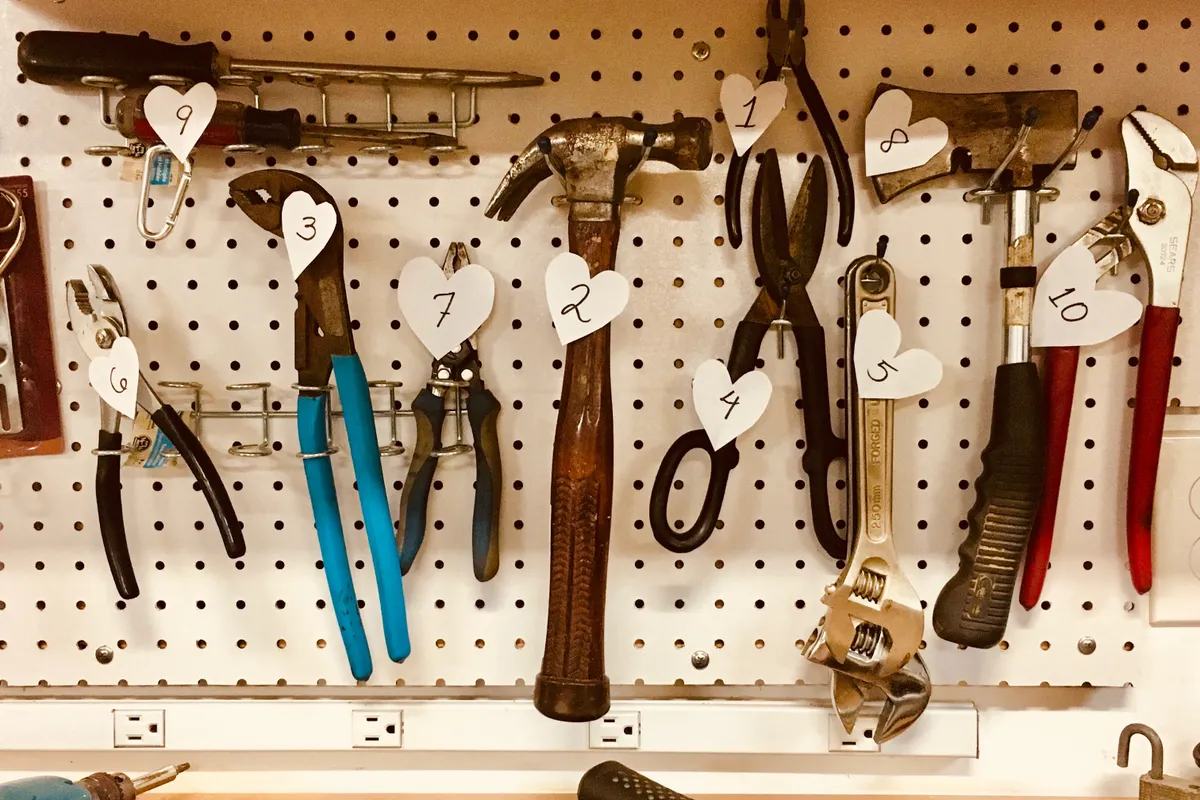
Drain the high-pressure hose and coil it in a broad, relaxed loop that does not kink, flatten, or pull on a fitting. Use the machine's hose wrap only when the manual supports the hose type and bend. Keep the spray gun and wand supported at more than one point so a bump cannot bend a connection or turn the wand into a falling object.
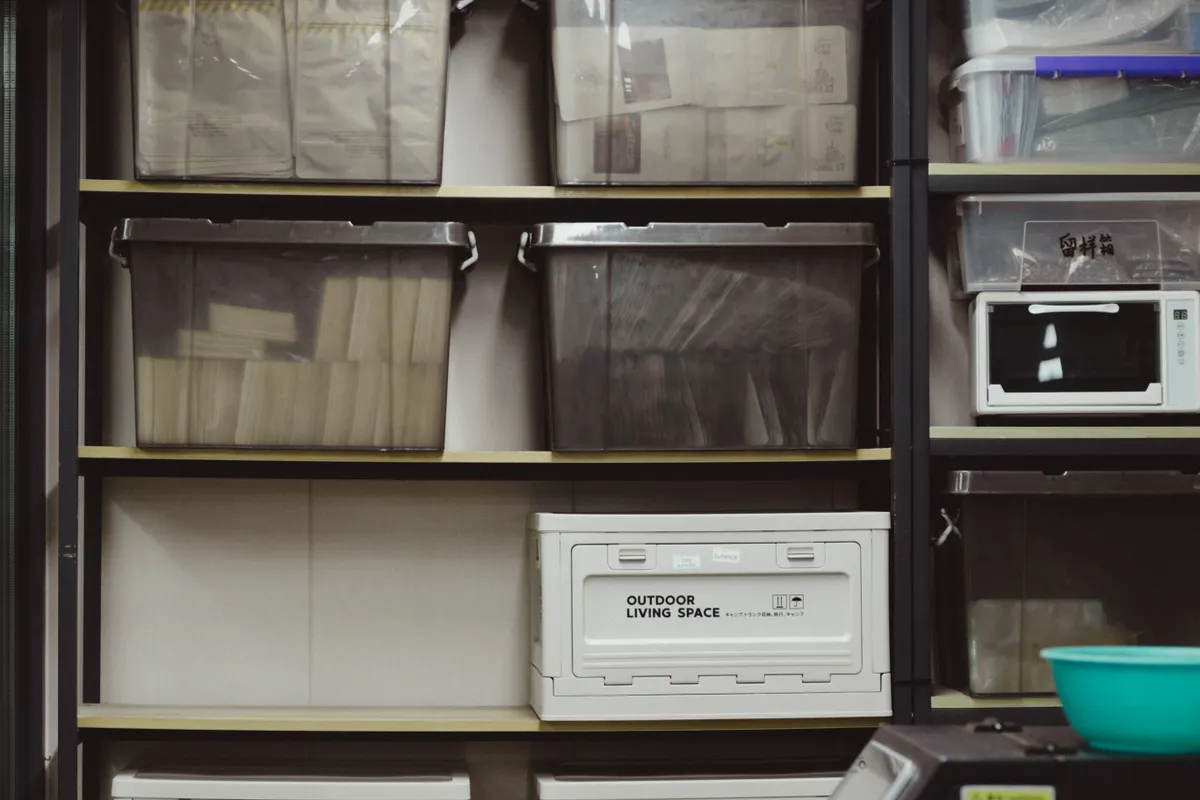
Give each nozzle a labeled, dry position where the orifice cannot collect grit. Keep model-specific adapters, O-rings, filters, detergent tubes, and the manual in a small ventilated bin or tray near the machine, not loose inside a wet hose coil. Discarding the packaging is fine; losing the model identity and approved connection sequence is not.
Build a dry bay that reveals leaks and damage
Park the washer upright on a level, dry surface in the orientation its manufacturer permits. Leave enough light and access to see water, oil, fuel, corrosion, damaged insulation, or a loose wheel. A shallow mat can make a new drip easier to notice, but it does not make an active fuel or oil leak safe and should not block required ventilation.
Do not hang the complete machine from its handle or frame unless the manufacturer publishes that storage configuration and load. Keep chargers, heaters, pilot lights, open flames, vehicle work, and spark-producing tasks out of the fuel decision. Do not seal a gas machine inside a closet or wrap a damp electric machine in an airtight cover merely to make the bay look tidy.
Use an off-season record instead of relying on memory
Before a long idle period, record the shutdown date, pump-protection product and procedure, fuel or oil work, detergent-system rinse, accessory condition, and the return-to-service tasks in the manual. Tag the machine as ready, winterized, or needs service so another household member does not start it or reconnect water prematurely.
At the next season, inspect the cord or engine, hoses, gun, fittings, nozzles, guards, tires, and floor before connecting anything. Recheck the recall list and follow the model's return-to-service sequence. If you find a fuel leak, cracked hose, damaged GFCI, missing guard, seized fitting, or uncertain pump treatment, use the manufacturer's service channel rather than improvising a pressure test in the garage.
Primary references
These sources support safety, disposal, or specification details used in this guide.