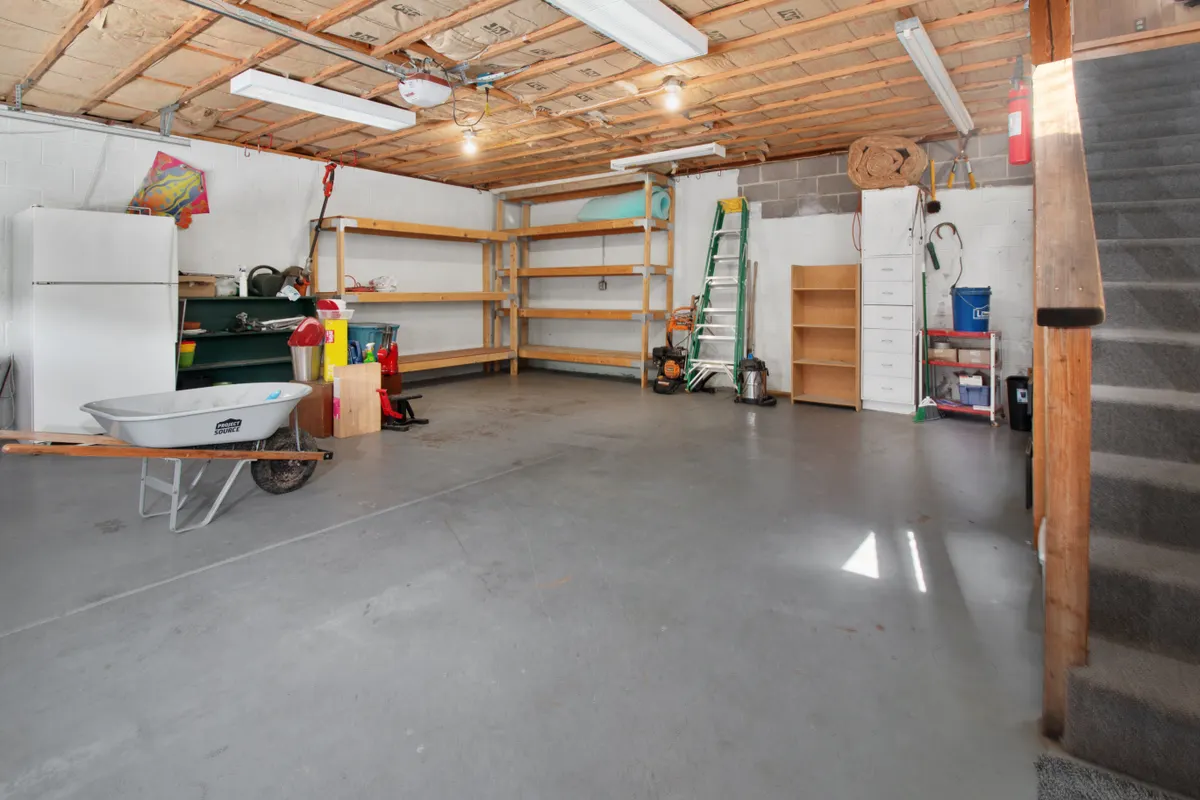
Shelf-depth sketch
What 12, 18, and 24 inches actually change
Cans, bottles, small cases, and narrow side walls.
Power-tool cases, medium totes, and most household backstock.
Deep bins, coolers, and large seasonal equipment only where clearance allows.
Subtract the complete assembled shelf projection from the real vehicle and walking envelope.
Field note: Measure the container including handles and lid overhang. Manufacturer load ratings still control the finished installation.
There is no single standard shelf depth
Twelve, eighteen, and twenty-four inches are common product choices, not one universal garage standard. The right depth depends on the complete stored item, the shelf frame, the wall or rack configuration, and the clearance left in the working garage.
Treat a catalog depth as a starting label. Compare the product's full assembled dimensions and installation guide, including posts, braces, wall spacing, feet, or projecting hardware, before drawing the final footprint on the floor.
Start with the container, not the shelf
Measure the widest and deepest items you intend to store, including handles and lid overhangs. A nominal 18-inch bin may need more room than its product name suggests, while paint cans and hand tools can live comfortably on much shallower shelves.
Group items by footprint before choosing a system. If only two holiday bins need 24 inches of depth, one deep lower shelf may be smarter than making the entire wall project into the parking bay.
What each depth does well
Twelve-inch shelving keeps small parts, cleaning supplies, and frequently used cases visible. Sixteen to eighteen inches is the flexible middle ground for power-tool cases, medium totes, and household backstock. Twenty-four inches suits large bins and bulky outdoor equipment but demands more floor clearance.
- 12 inches: cans, bottles, small cases, and narrow utility walls
- 16–18 inches: mixed homeowner storage and most medium totes
- 24 inches: deep bins, coolers, and bulky seasonal equipment
- 30 inches or more: usually a platform or rack, not everyday shelving
Protect the vehicle envelope
Measure from the finished wall to the nearest point of the parked vehicle, then account for door swing, mirrors, charging cables, and the way people actually enter. A shelf that technically fits can still make every grocery run frustrating.
Keep shelf corners out of shoulder and head paths. Where clearance is tight, a shallow upper shelf paired with wall hooks below can provide useful storage without creating one continuous obstruction.
Check structure, adjustability, and anchors
Compare the manufacturer’s load rating at the shelf level—not only the large total printed on the box. Ratings depend on correct assembly, even loading, and suitable anchoring. Verify wall type, fasteners, corrosion resistance, and whether replacement shelves are available.
Adjustable shelf spacing usually creates more real capacity than an extra-deep frame. Store dense items low, inspect hardware periodically, and never exceed the system’s documented limits.
Primary references
These sources support safety, disposal, or specification details used in this guide.