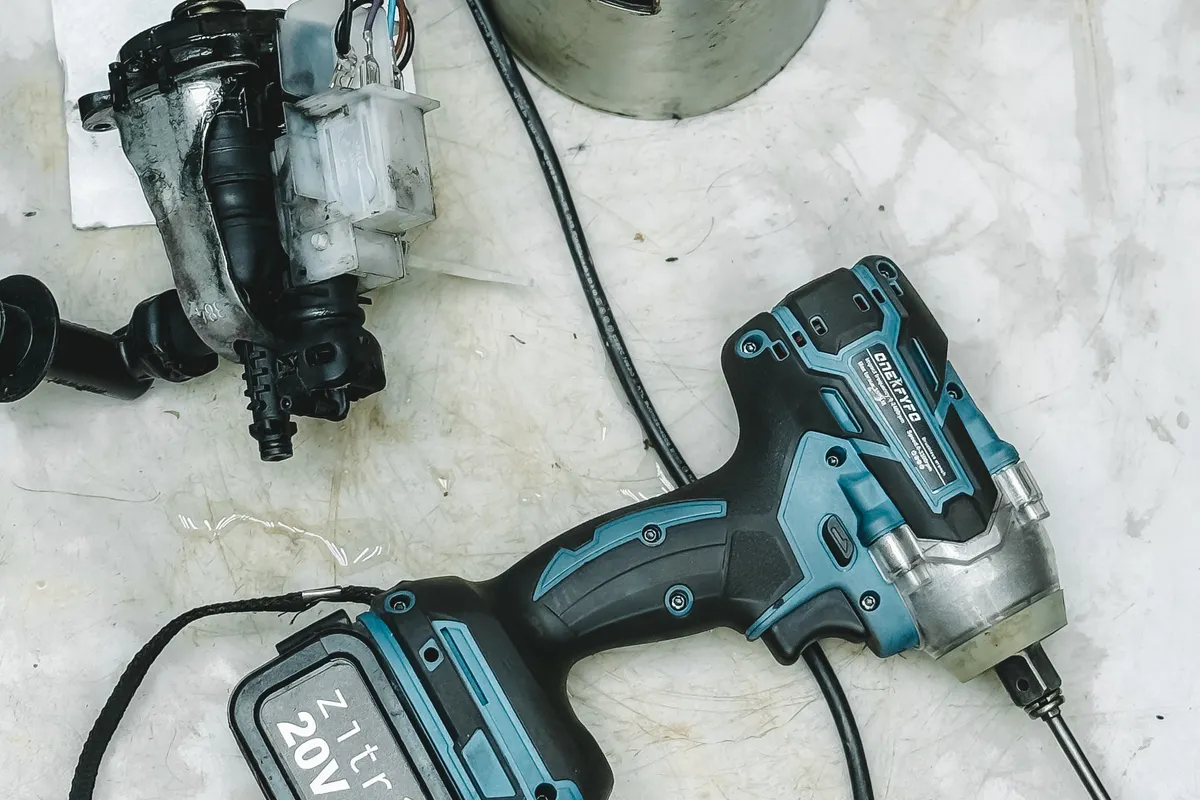
Extension-cord storage station
Inspect, label, and hang every cord
01Inspect before coiling
- Unplug both ends and let connected equipment stop and cool
- Check the plug, grounding pin, strain reliefs, jacket, connector, and full length
- Move cracked, crushed, melted, loose, or exposed cords out of service
- Replace damaged cords instead of taping damaged insulation
02Coil and label
- Make relaxed loops without hard folds or forced twists
- Keep both plug ends and the factory label accessible
- Tag the length, gauge or AWG, indoor/outdoor marking, and rating from the cord itself
- Use a reusable strap without cinching the coil tight
03Hang and retrieve
- Support the full coil on a broad hanger or suitable reel
- Never staple, nail, or route an extension cord as permanent wiring
- Stay clear of water, heat, sharp edges, doors, vehicle paths, and walking routes
- Inspect again and match the label to the job before every use
Field note: Extension cords are temporary equipment. The cord and reel instructions—not color or appearance—control location, load, storage, and use.
Retire damaged cords before organizing them
Unplug the cord at both ends, let connected equipment stop and cool, then inspect the plug, grounding pin, strain reliefs, jacket, connector body, and the cord's full length. Look for cracked insulation, exposed conductors, melted areas, crushed sections, loose blades, or damage around either end. The U.S. Consumer Product Safety Commission advises replacing damaged extension cords rather than repairing damaged insulation with tape.
Put a questionable cord in a clearly separated remove-from-service location so it cannot return to the working rack by accident. Follow the manufacturer or a qualified service provider for disposal or repair guidance; an attractive coil does not make a damaged cord safe to use.
Make the wall station storage, not permanent wiring
Extension cords are temporary equipment. Do not route a stored or connected cord through a wall, ceiling, doorway, window, or under a rug or furniture, and do not staple or nail it in place. If the garage repeatedly needs power in one location, ask a qualified electrician about suitable permanent wiring instead of leaving an extension cord installed as the solution.
Choose a storage wall away from the vehicle path, garage-door hardware, standing water, sharp edges, direct heat, and the main route into the house. Keep the plug ends visible and the cord completely unplugged while stored. A hanger controls the coil; it does not turn the cord into a fixed circuit.
Coil loosely enough to avoid twists and hard bends
Start at one end and make relaxed loops of a size the cord accepts without fighting back. Rotate or feed the cord as needed so stored twists do not accumulate. Do not cinch the coil with the cord's own plug end, force a sharp fold, or hang the entire weight from the plug, connector, or a narrow hook that pinches one section.
A reusable hook-and-loop strap can hold the finished coil without compressing it. Over-under coiling is useful for some flexible cords because alternating loops can reduce twist, but it is a handling method—not a replacement for the cord or reel manufacturer's storage instructions. If the jacket is stiff, kinked, or difficult to coil, stop and inspect it rather than forcing it flat.
Label the facts that determine safe use
Keep the factory label readable. Record the cord length, wire gauge or AWG, indoor or outdoor marking, number of conductors, and the electrical rating printed on the cord or tag. Do not copy a capacity from another cord that looks similar. The cord's own label and instructions control, and the connected load must stay within those directions.
Use a separate tag for the plain-language job, such as '25 ft — indoor bench tools' or 'outdoor-rated — yard equipment,' only after confirming the printed markings. Color coding can speed retrieval, but color alone is not evidence of outdoor suitability, grounding, gauge, or capacity.
- Length and wire gauge or AWG from the cord marking
- Indoor or outdoor designation from the label
- Electrical rating and any manufacturer restrictions
- Grounded or two-conductor configuration as actually built
- Inspection month so long-stored cords return to a regular check
Choose a broad hanger or a reel you can inspect
A broad wall hanger is simple, keeps both ends visible, and works well when each cord has its own labeled position. A manual reel can manage a longer cord neatly, but it should match the cord and let you inspect the jacket as it pays out. Follow the reel instructions for mounting, winding, load, and whether the cord must be fully extended during use.
A retractable reel can improve retrieval for frequent work, but it adds a mechanism, mounting requirements, and model-specific use rules. Do not assume any reel is appropriate for any loose extension cord. Whichever system you choose, support the whole coil, preserve access to the factory markings, and keep the storage point within easy reach from the floor or a stable working position.
Use the same end-of-job reset every time
Switch off the connected tool, unplug by gripping the plug rather than pulling the cord, and walk the cord back so you can see every section. Wipe away only surface dirt using the manufacturer's directions and let the cord dry before storage. The CPSC advises unplugging extension cords when they are not in use.
Return each cord to its labeled hanger with both ends accessible. Before the next job, confirm that the cord is intended for the location and load, inspect it again, and arrange it where it will not be pinched, driven over, tripped on, or exposed to water. The storage routine should make the right choice easier; it cannot make an undersized, damaged, or incorrectly used cord acceptable.
Primary references
These sources support safety, disposal, or specification details used in this guide.