Fit-first comparison
Match the protector to the way the job runs
| Decision factor | Foam or reusable plugs | Protective earmuffs | Plugs plus muffs |
|---|---|---|---|
| Strong fit | Hot work and low-profile PPE | Intermittent, visible protection | Very high or impulse noise |
| Main advantage | Light and compact | Easy to check and replace | Additional protection when justified |
| Fit risk | Incomplete canal seal | Gaps from glasses or hair | Two poor fits do not make one good system |
| Handling | Clean hands and practiced insertion | Seat cups fully around both ears | Fit plugs first, then verify muff seal |
| Do not assume | Partly inserted equals package NRR | Noise canceling equals NRR-rated | Package ratings can be added |
Field note: Use an NRR-labeled device, follow its instructions, and treat personal fit—not the largest package number—as the deciding factor.
Control the noise before choosing a protector
Hearing protection is the last layer, not permission to accept unnecessary noise. Start by using a quieter method or tool when practical, maintaining the equipment, increasing distance for everyone not doing the work, and limiting time near the source. Keep family members and pets out of the work area rather than handing them a spare pair of muffs after the tool starts.
NIOSH uses 85 dBA averaged over an eight-hour workday as an occupational recommended exposure limit and halves the recommended duration for each 3 dB increase. That is a risk-management benchmark, not a promise that a short homeowner task is safe. Individual susceptibility, repeated projects, impulse sound, and the actual level at your ear all matter.
Use warning signs as a prompt to measure
If you must raise your voice to speak with someone about three feet away, or if your ears ring and sound seems dull after the task, treat the job as too loud to repeat unchanged. Those signs are not substitutes for a measurement because tool, material, room reflections, distance, and operating technique can change exposure.
A sound level meter can help map where noise is highest and whether a quieter setup made a difference. NIOSH offers a free iOS Sound Level Meter app developed for workplace screening; the agency notes that its Android app accuracy cannot be verified across varied hardware. A phone reading should inform a cautious decision, not replace professional measurement when exposures are high, frequent, or uncertain.
Choose earplugs when low profile and heat matter
Foam plugs can fit many ear canals, while pre-molded plugs trade the roll-down step for a reusable shape. Either type must seal the canal comfortably. Follow the product instructions; for foam, use clean hands, form the plug without creasing it, straighten the ear canal, insert it, and hold it while the foam expands. Do not cut a plug to make it fit.
Plugs are light, easy to carry, and less bulky in a hot garage. They can also work better beside some glasses, face shields, or headgear. The tradeoff is fit: a partially inserted plug may provide far less protection than its package suggests, and repeatedly handling foam plugs with dirty hands is a poor match for stop-and-start work.
Choose earmuffs for fast, visible on-and-off use
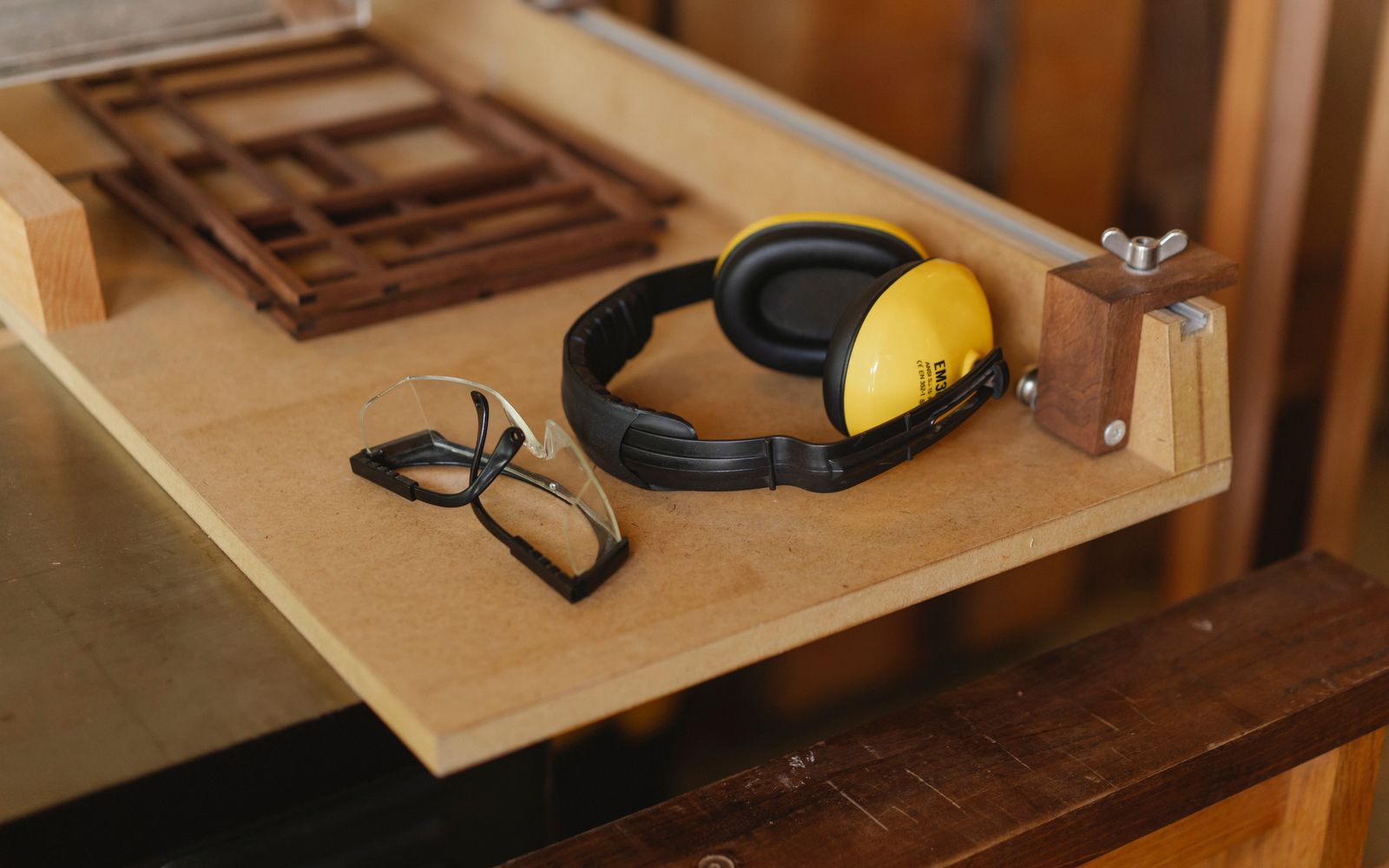
Earmuffs surround the outer ear with cushioned cups. They are usually easier to position correctly, easy to see during a pre-start check, and convenient when a noisy cut alternates with quiet layout work. Adjust the headband so both cups fully enclose the ears and press evenly against the head.
The seal is the weak point. Eyeglass temples, thick hair, hats, respirator straps, or other equipment can create gaps. Check the full combination you will wear at the bench; a comfortable muff used alone is not automatically compatible with the eye and respiratory protection required by the task.
Read the NRR without treating it as a guarantee
A Noise Reduction Rating on the package is a laboratory rating, not the exact reduction at your ear. NIOSH says individual fit testing is the best way to learn how much protection a person actually receives. Compare NRR only after confirming the device fits, stays sealed during the work, and can be worn consistently.
Consumer noise-canceling earbuds or headphones are not hearing protectors merely because they make a tool sound quieter. NIOSH says active noise cancellation should not be treated as hearing protection unless the product is labeled with an NRR. Also avoid buying the highest number blindly: too much reduction can reduce awareness and encourage users to remove protection to communicate.
Reserve dual protection for noise that justifies it
NIOSH workplace guidance calls for earmuffs over earplugs at exposures of 100 dBA or more or for impulse sounds. Do not add the two package ratings together; the combined result depends on the devices and their fit. At that point, first ask whether the task can be made quieter, moved, isolated, shortened, or handled with different equipment.
Frequent high-level work, impulse noise, unexplained symptoms, or uncertainty about protection deserves qualified help from an occupational hearing professional, industrial hygienist, or audiologist. Follow the tool and protector manufacturers' instructions, and seek medical advice for persistent ringing, pain, sudden hearing change, or other concerning symptoms.
- Pick one protector for the whole task, not just the loudest few seconds
- Test earplug fit or check the earmuff seal with every other item of PPE in place
- Keep clean spare plugs or a dedicated pair of muffs at the tool station
- Replace damaged cushions, stiff foam, cracked bands, or contaminated devices
- Reassess the setup when the tool, material, room, or work duration changes
Primary references
These sources support safety, disposal, or specification details used in this guide.