Drive-size table
Start in the middle; expand only when needed
| Decision factor | 1/4 in drive | 3/8 in drive | 1/2 in drive |
|---|---|---|---|
| Best use | Small fasteners and tight access | Mixed garage and household repairs | Larger fasteners and heavier work |
| Access | Best | Balanced | Bulkiest |
| Starter value | Useful second set | Best first platform | Add only for defined jobs |
| Socket mix | Mostly shallow | Shallow plus core deep sizes | Job-specific sizes |
| Caution | Easy to overload | Check continuous metric and SAE coverage | Do not confuse size with permission for impact use |
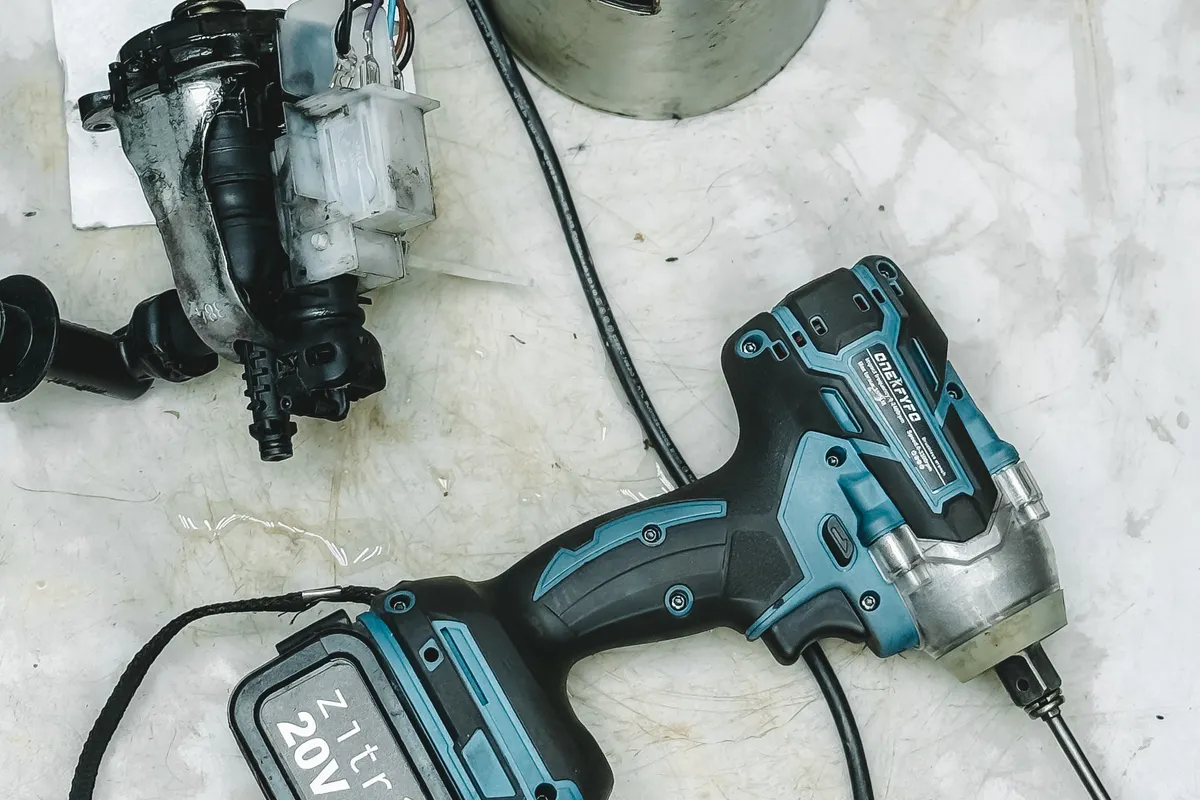
Field note: Standard chrome hand sockets are not substitutes for impact-rated sockets on an impact wrench.
Three-eighths drive is the homeowner middle
A 3/8-inch-drive ratchet balances access and capacity for furniture, equipment, shelving, and many vehicle-adjacent maintenance tasks. It is usually the most useful first platform for a mixed garage.
A smaller 1/4-inch set fits tight spaces and small fasteners. A 1/2-inch set supports larger work but adds bulk and does not belong on every beginner purchase list.
Buy continuous size coverage
Check the printed size list. Some high-piece-count sets skip useful sockets while inflating the number with driver bits and hex keys. Continuous metric coverage is particularly valuable for modern equipment and hardware.
- Metric and SAE ranges that match your actual equipment
- Shallow sockets for general access
- A core selection of deep sockets for exposed threads
- Extension bars and a universal joint only when clearly useful
Ratchet feel matters
A smaller swing arc helps in confined locations, while a comfortable handle and clear direction lever reduce frustration. The ratchet should hold sockets securely and release them predictably.
Use sockets designed for the tool. Standard chrome hand sockets are not a substitute for impact-rated sockets on an impact wrench.
Put sockets in an order you can scan
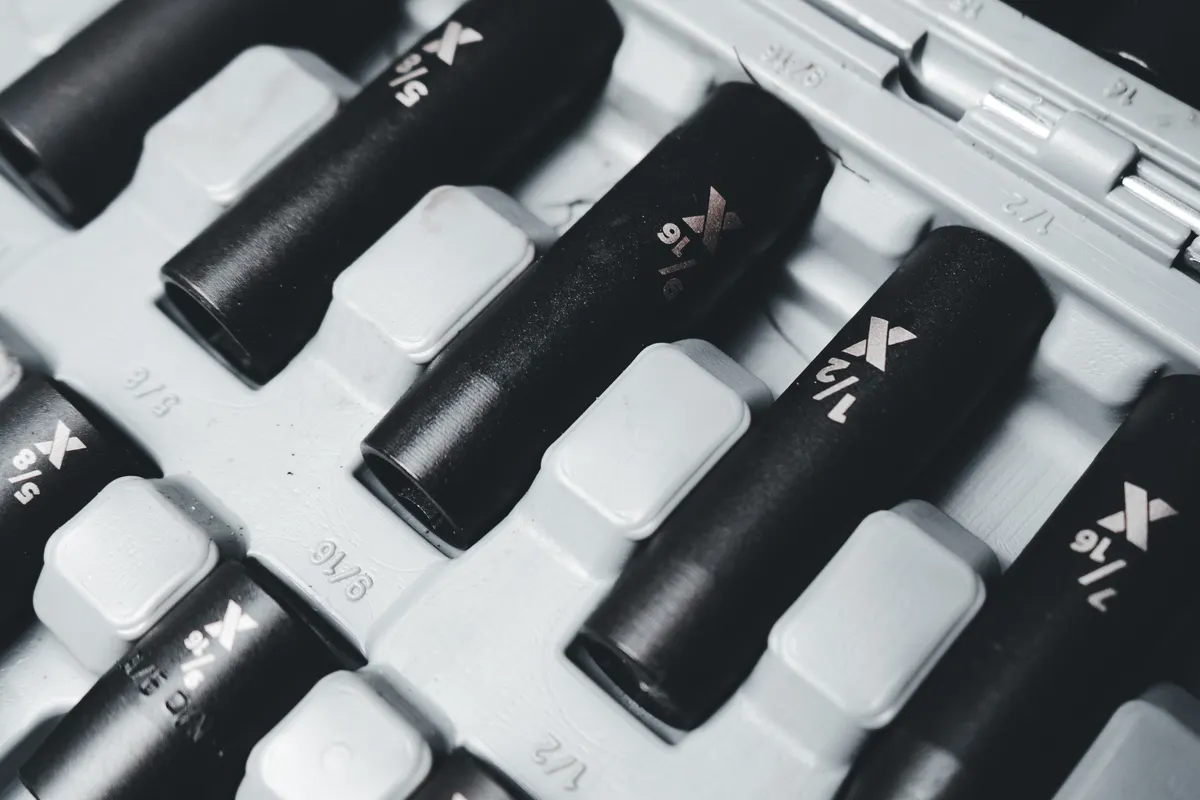
There is no single universal case order, but a consistent sequence makes the right socket easier to find and a missing one easier to notice. Separate drive sizes first, then keep metric and SAE in different rows or clearly labeled sections.
Within each section, separate shallow and deep sockets and arrange each row from the smallest marked size to the largest. Face the size markings the same direction and leave each socket in a defined position instead of filling gaps with the nearest piece.
- Separate 1/4-, 3/8-, and 1/2-inch drive tools
- Keep metric and SAE in distinct labeled groups
- Divide shallow and deep sockets
- Sort each group from smallest to largest
- Use an empty position as the signal that a socket is still at the job
The case is part of the tool
A case should keep sockets in place when carried and make missing sizes obvious. If the molded case is too large for your storage, confirm the sockets are clearly marked before moving them to rails or drawers.
Wipe tools after dirty or wet work and replace damaged pieces. A smaller complete set is more useful than a large collection with missing common sizes.
Separate the drive size from the fastener size
The square connection to a ratchet and the opening that fits the nut are different dimensions. Write both on the job list. A 3/8-inch-drive socket set is not a promise that its contents fit every 3/8-inch fastener, and a larger ratchet does not compensate for the wrong socket opening.
Start with three actual repair or assembly jobs, their specified fastener sizes, access constraints, and whether a tightening torque is stated. Compare the set's printed contents with that list. Record a missing required socket as a separate purchase rather than assuming the next larger size is close enough. CCOHS emphasizes the correct wrench type and size to prevent slipping and damage.
For a hypothetical shortlist, Kit A may contain the four sizes on your list plus many unrelated bits, while Kit B contains three of those sizes and a more compact case. Compare Kit B plus the missing approved socket against Kit A's total cost and storage footprint. This method avoids a misleading piece-count ranking without pretending one kit is universally best.
A ratchet is not automatically a torque-measuring tool. Where the equipment specifies tightening torque or a sequence, follow that requirement with appropriate equipment. Vehicle, structural, and other safety-critical work needs more than this starter purchasing checklist.
Primary references
These sources support safety, disposal, or specification details used in this guide.